


 Back to Blog
Cruise-Ship Operator Communicates Virus Crisis
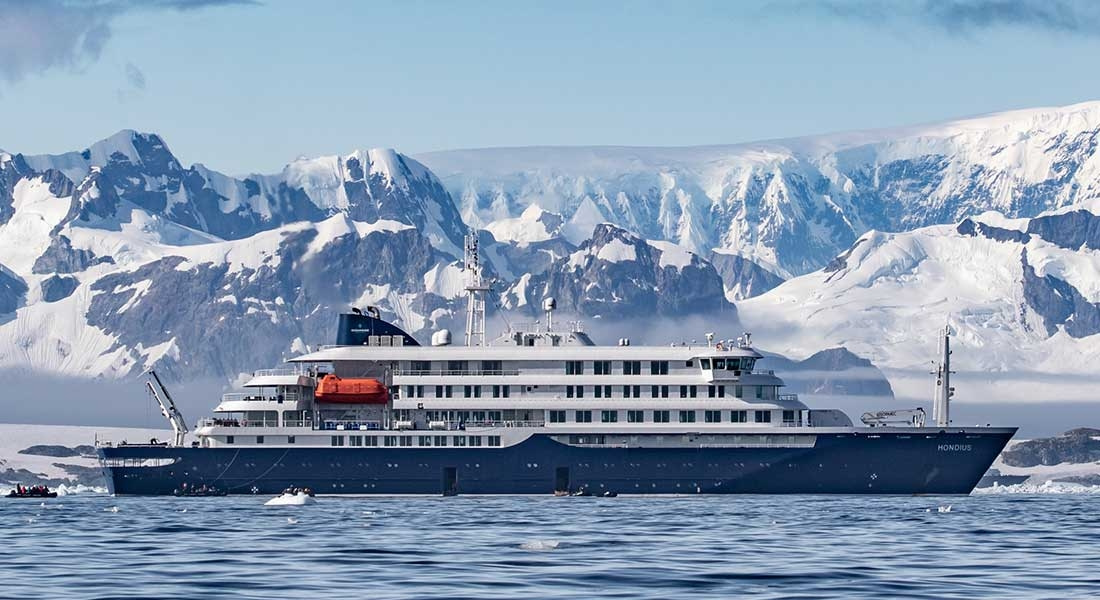


A suspected virus outbreak on a cruise ship that may have killed three people and sickened several others is a major crisis for the ship operator. The press releases Netherlands-based Oceanwide Exhibitions issued are instructive in showing a company trying to communicate a fast-moving crisis.
The first press release, posted late on May 3, reported a “serious medical situation on board” the ship, the MV Hondius (pictured), which was then off the coast of Cape Verde in West Africa. Three passengers died and another was in intensive care in Johannesburg. Two crew members on board required urgent medical care, Oceanwide said.
Cape Verdean authorities weren’t allowing the two to leave the ship. Dutch authorities were trying to get them repatriated, as well as a deceased individual and a guest associated with that deceased individual. (On May 6, Oceanwide confirmed that the three were finally able to disembark.)
Oceanwide said it was working closely with international authorities, including the World Health Organization. Interestingly, this first statement doesn’t mention hantavirus, which is now suspected to be the cause. How passengers became infected is a major part of the story. Hantaviruses are mostly spread through the feces and urine of rodents. The MV Hondius is an exhibition ship for birdwatching and observing other wildlife.
‘Medical Condition’
Oceanwide published its second statement on May 4 at 1:30 p.m. CET. It provided a timeline that revealed the first passenger died on board April 11, with the cause unknown. His body was taken off the ship April 24, accompanied by his wife, both Dutch nationals. On April 27, Oceanwide learned she died on the return trip. It hadn’t been confirmed that the deaths were related to “the current medical condition on board.”
Also on April 27, the other passenger, a British national, became ill and was sent to intensive care in Johannesburg. “A variant of hantavirus has been identified in this patient,” Oceanwide said, invoking hantavirus for the first time. On May 2, another passenger, a German national, died on board, though the cause isn’t yet known. At this point, no other people among the 149 on board were identified to have symptoms. Only the patient in South Africa had been diagnosed with hantavirus (as of this release).
The third statement came later on May 4, at 11:30 p.m. CET. Oceanwide confirmed, via the WHO, that the Dutch woman who accompanied her husband’s body and who also died had hantavirus. That was the second confirmed case. The company reiterated health precautions it was taking and said its priority was to disembark the passengers so they could be medically screened. It was considering having the MV Hondius sail on to the Canary Islands for that purpose ((it left Cape Verde on May 6).
Andes Virus
The fourth press release, posted May 5, stated for the first time that there was an ongoing investigation into the cause of the illness. As for the source of the hantavirus, Oceanwide provided a link to a press conference with Dr. Maria Van Kerkhove of the WHO, during which she said the organization’s hypothesis is that the culprit is the Andes virus, the only hantavirus known to be transmitted through human-to-human contact. The WHO also assumed the first person was infected before boarding the ship.
The virus’ origin is obviously an important issue for Oceanwide. Right now, it’s scrambling to deal with the facts on the ground (water?), but eventually the crisis’ cause will loom larger. The company doesn’t want the culprit to be unsanitary conditions — that would implicate Oceanwide itself. And the more one is responsible for a crisis, the tougher it is to deal with. (In its May 6 statement, Oceanwide said Swiss authorities confirmed that a passenger on an earlier leg of the journey tested positive for hantavirus.)
One commenter to a New York Times story on the crisis wrote, “What this tells me is that the cruise ship has rats.” Oceanwide doesn’t want that to be true or at least be the cause. Right now it’s looking like it isn’t the cause. But at some point the company will be forced to communicate further on the matter.
Photo Credit: Oceanwide Expeditions
Sign up for our free weekly newsletter on crisis communications. Each week we highlight a crisis story in the news or a survey or study with an eye toward the type of best practices and strategies you can put to work each day. Click here to subscribe.